 Twitter
An AI product studio and a traditional development shop are two common ways for a startup to get software built. Some startups hire an in-house team instead, but many choose an outside partner. The right choice depends on how much of the product you have already figured out.
How a traditional development shop works
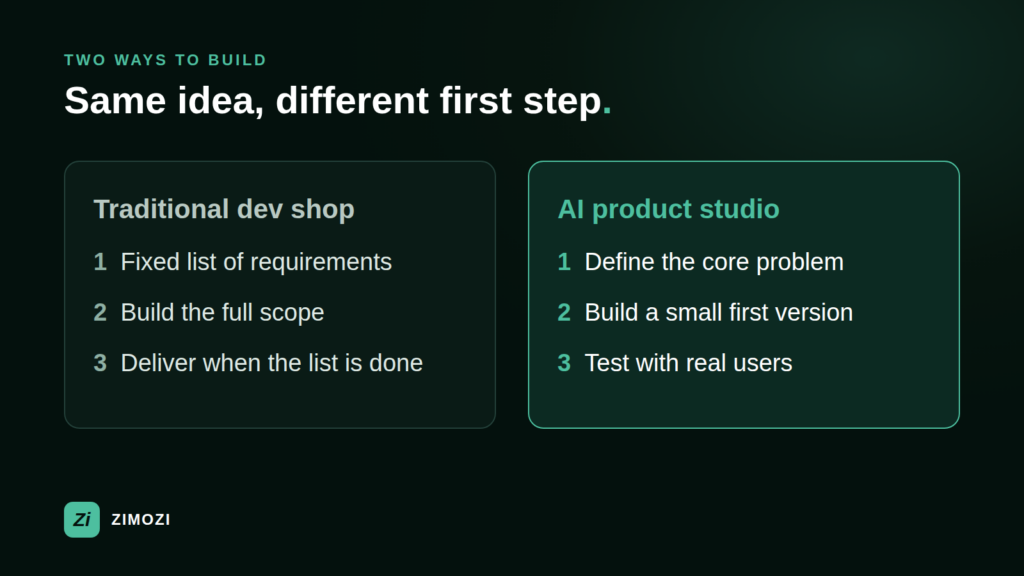
A traditional shop focuses on delivery. You give them a list of requirements, and they build what is on the list. Pricing is usually hourly or a fixed price for a fixed scope.
This works well when the project is fully defined. If the requirements are clear and unlikely to change, a shop can deliver them reliably. It works less well when you are still deciding what to build, because the plan has to be settled before work starts.
How an AI product studio works
An AI product studio takes a more hands-on role in the early decisions. It helps you define the problem, choose which features matter first, and decide what to leave for later. Good communication is a big part of this, and our post on communication in agile methodology explains how we keep projects clear as they change.
A studio that works with AI will also plan the technical side early. That includes how data is stored and organised so an AI feature can use it. If you are unsure what that involves, our guide to data lakes and data warehouses for AI products is a good starting point.
An example: a customer support platform
Say a startup wants to build a customer support platform. A traditional shop would build the full plan: the database, the user interface, a ticketing system and every feature on the list. You would see the result when the whole list is finished.
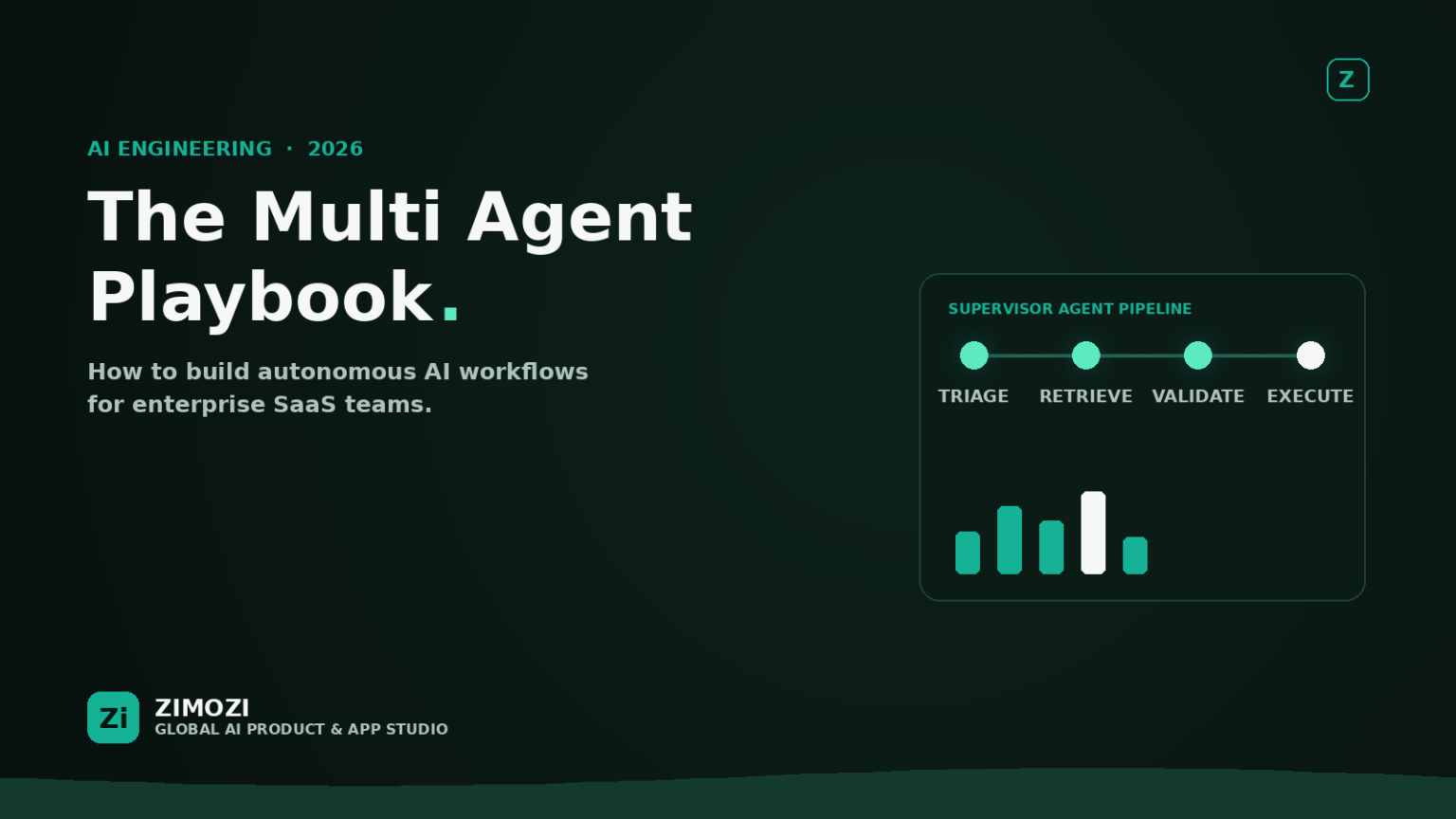
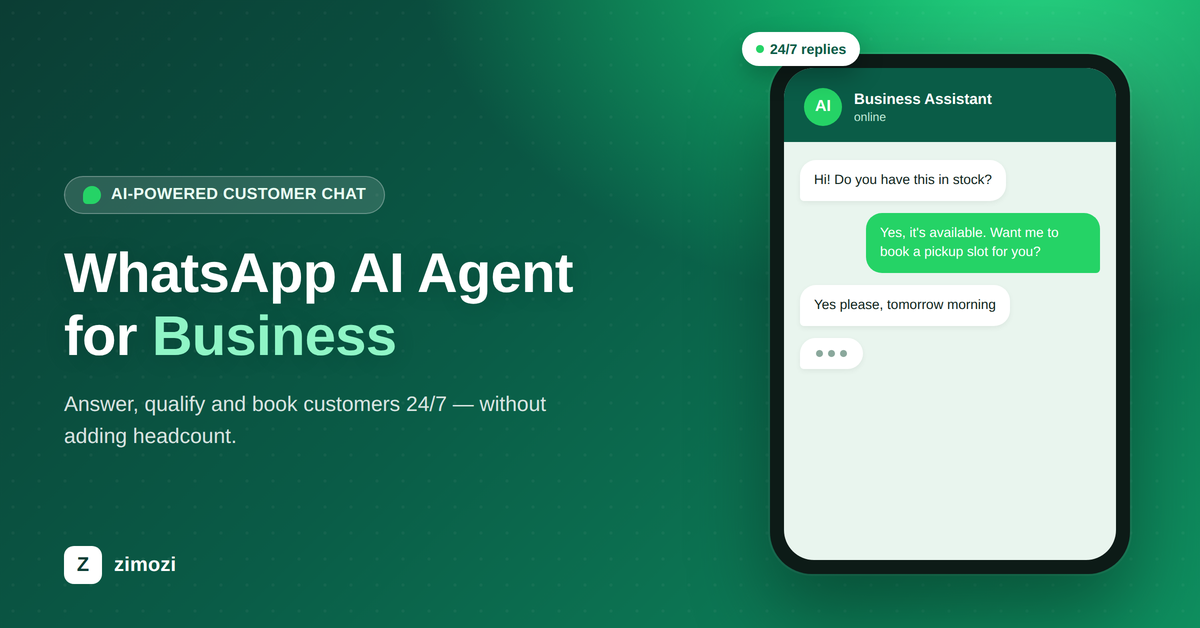
An AI product studio might suggest a smaller first step. Instead of a full ticketing system, it could build a simple interface connected to an AI agent that reads incoming emails and sorts them by topic. The team could then see how it works with real messages before building more. This kind of first release is often called a minimum viable product. Our post on multi-agent workflows covers how larger AI workflows are put together, and our page on a WhatsApp AI agent for business shows a similar idea for support and sales messages.
A smaller start does not guarantee lower cost or a faster launch. It does make it easier to check the idea early and change direction if needed.
What to think about before you choose
Whichever option you pick, a few questions are worth asking:
- Who will own the code and the data when the project ends?
- How will personal and customer data be protected, especially if an AI agent reads it?
- What can the AI agent get wrong, and who reviews its work?
- Which part of the product will you build first?
A traditional shop is a sensible choice when your plan is fixed. An AI product studio suits you better when you want help shaping the product as well as building it.
Building with Zimozi
Zimozi works as an AI product studio. We build custom web and mobile applications, SaaS products, and AI agents with workflow automation. You can see the full list on our services page.
We also work in fintech and digital product development. For example, we could build a secure platform for handling loan applications and connect it to other systems so the data collection is automated. Whatever the project, we start with one clear use case and keep the first version manageable.
If you are considering a similar project, Zimozi can help define a small first version and assess the technical requirements. Would you like to discuss the idea?